27 April 2026Portland Flooring
Top 5 Waterproof Flooring Options for Modern Australian Kitchens
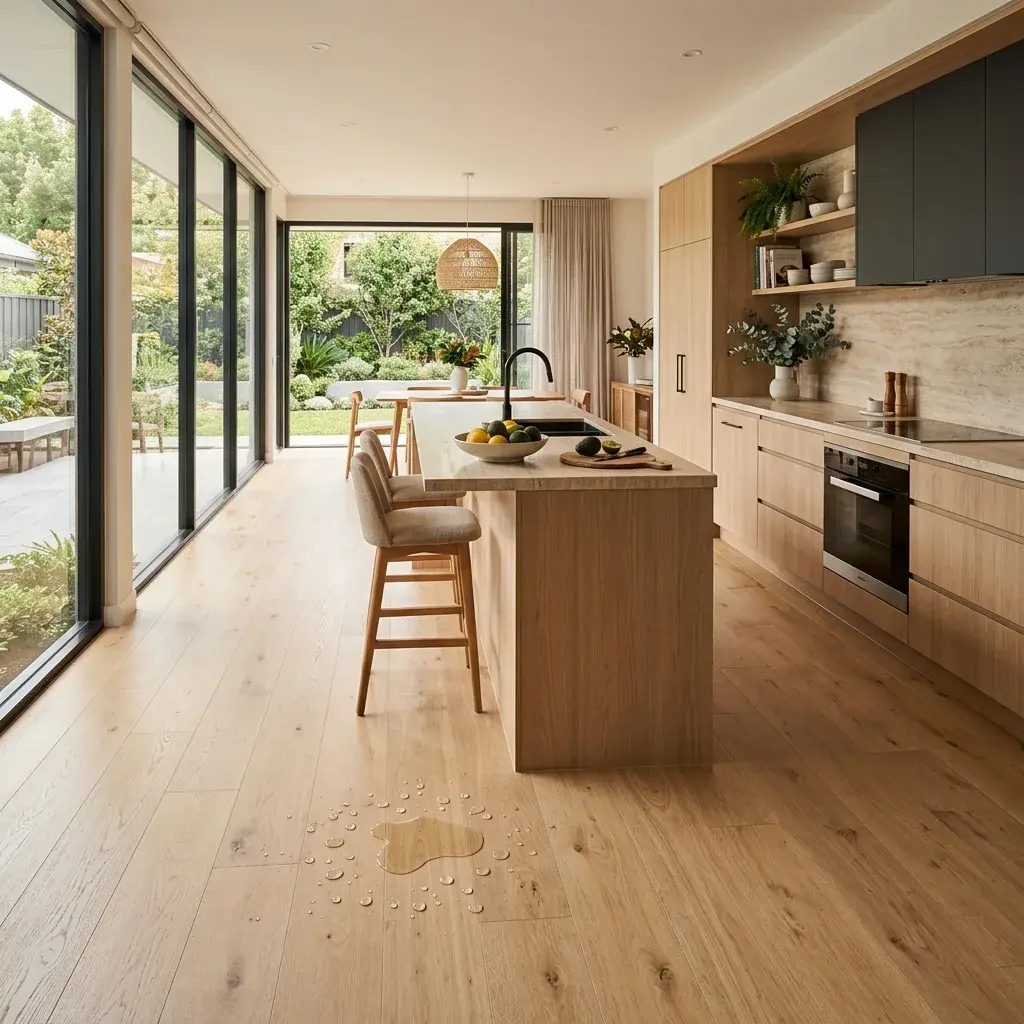

The kitchen is the undisputed heart of the Australian home. It’s where families gather, entertaining happens, and culinary masterpieces are created. However, it is also the room most prone to spills, dropped utensils, heavy foot traffic, and plumbing mishaps.
When renovating a kitchen in Victoria, selecting the right flooring is paramount. You need a surface that can withstand dropped plates, muddy paws, and, most importantly, water. A leaking dishwasher or a spilled pot of boiling water can spell disaster for the wrong type of floor, leading to swelling, warping, and thousands of dollars in replacement costs.
Historically, homeowners were limited to cold, hard ceramic tiles or outdated linoleum. Today, technological advancements in flooring manufacturing have revolutionized kitchen design. You can now achieve the warmth, texture, and aesthetic of natural timber without sacrificing waterproof performance.
In this comprehensive guide, the experts at Portland Flooring walk you through the top 5 waterproof flooring options for modern Australian kitchens, helping you strike the perfect balance between luxury, durability, and practical design.
Before diving into the options, it’s essential to understand the difference between water-resistant and waterproof.
In a high-risk area like a kitchen, where hidden leaks under sinks or behind dishwashers can go unnoticed for days, true waterproofing is non-negotiable.
Best For: Open-plan living, combining timber aesthetics with invincible durability.
If you want the warmth and beauty of natural wood in your kitchen without the stress of water damage, SPC (Stone Plastic Composite) Hybrid Flooring is the undisputed champion.
Hybrid flooring is engineered with a core made of natural limestone powder and stabilizers. This rigid core is 100% waterproof. If your sink overflows, the water will simply sit on top of the planks until you wipe it up.
Key Benefits:
Best For: Budget-conscious renovations and softer underfoot feel.
Luxury Vinyl Plank (LVP) is the predecessor to hybrid flooring and remains an excellent waterproof option for kitchens. Unlike the thin, rolled vinyl of the 1980s, modern LVP comes in thick, textured planks that mimic wood or stone.
LVP is made entirely of synthetic materials (PVC), making it inherently 100% waterproof. It is highly resilient and handles spills and moisture with ease.
Key Benefits:
The Downside: LVP is a "flexible" floor. It requires a perfectly smooth and flawless subfloor. Any bumps or divots in the concrete beneath will eventually telegraph through and become visible on the surface of the vinyl.
Best For: Traditional aesthetics, underfloor heating, and extreme longevity.
Tiles have been the go-to kitchen flooring for centuries, and for good reason. They are the definition of waterproof and can last for decades if maintained properly.
Fired at extreme temperatures, porcelain tiles are incredibly dense and impervious to water. You can literally hose down a tiled floor without damaging the material itself.
Key Benefits:
The Downside: Tiles are extremely hard and unforgiving. If you drop a glass or a plate, it will shatter. They are also very cold underfoot during Victorian winters. Lastly, while the tiles are waterproof, the grout lines are porous. Grout can stain deeply from spilled wine or pasta sauce and requires rigorous scrubbing and regular resealing to keep the kitchen looking clean.
Best For: Industrial, ultra-modern, and minimalist architectural designs.
Polished concrete has surged in popularity across modern Australian architectural homes. It provides a sleek, seamless, and industrial look that pairs beautifully with minimalist kitchen cabinetry.
When properly sealed, polished concrete is highly resistant to water and spills. It is virtually indestructible under normal household conditions.
Key Benefits:
The Downside: Similar to tiles, concrete is incredibly hard and unforgiving on dropped dishes and human joints. It also requires professional, high-end sealing; if the sealant wears off, the concrete becomes porous and will absorb water and stains (like oil or wine) permanently. Furthermore, retrofitting polished concrete in an existing renovation can be prohibitively expensive and messy.
Best For: Those who absolutely must have real wood and are willing to maintain it.
Wait—real wood in a kitchen? Yes, but with strict caveats. Solid hardwood is generally not recommended for kitchens due to its tendency to warp and cup when exposed to moisture. However, high-quality engineered timber can be used if you are exceptionally diligent.
Engineered timber consists of a real hardwood veneer bonded to a multi-ply plywood core. This cross-layered construction makes it far more structurally stable and less prone to moisture expansion than solid wood.
Key Benefits:
The Downside: Engineered timber is water-resistant, NOT waterproof. Spills must be wiped up immediately. A slow leak under the fridge will ruin the floor. It is also highly susceptible to scratches and dents from dropped utensils. We only recommend this for adult-only households where immediate spill cleanup can be guaranteed.
You might notice that traditional Laminate Flooring didn't make this list.
While laminate is highly scratch-resistant and budget-friendly, its core is made of High-Density Fiberboard (wood byproducts). If water penetrates the seams of a standard laminate floor, the core will swell like a sponge and permanently deform. While "water-resistant" laminates exist, they are too risky for a room containing sinks, dishwashers, and refrigerators.
If you want the look of laminate in a kitchen, Hybrid Flooring is the mandatory upgrade.
Choosing the right waterproof kitchen flooring depends entirely on your lifestyle, budget, and design vision.
At Portland Flooring, we specialize in providing Victoria's most stunning, durable, and 100% waterproof Hybrid Flooring collections. From the light, airy aesthetic of Pale Oak to the rich depths of Spotted Gum, our premium planks are engineered to survive the chaos of the modern Australian kitchen while looking absolutely flawless.
Ready to upgrade the heart of your home?
Visit our Pakenham showroom to test the durability of our hybrid planks yourself, or contact our experts today to arrange a free measure and quote. Let's create a kitchen that is as strong as it is beautiful.