27 April 2026Portland Flooring
Sustainable Living: The Benefits of Eco-Friendly Flooring Materials in Australia
As Australians become increasingly conscious of their environmental footprint, the demand for sustainable, eco-friendly building materials has skyrocketed. When building a new home or renovating an existing one, the choices we make today have a lasting impact on our planet's future.
Flooring is one of the largest physical elements of a home. Historically, achieving a luxurious timber aesthetic meant contributing to the deforestation of old-growth forests and introducing harmful chemical finishes into the home environment.
Fortunately, technological advancements have ushered in a new era of eco-conscious interior design. Today, you do not have to sacrifice luxury or durability to build a "green" home. In this guide, Portland Flooring explores the incredible environmental and health benefits of choosing eco-friendly flooring materials like premium SPC Hybrid planks for your Australian home.
Before we look at the solutions, we must understand the problem. Traditional flooring materials often carry a heavy environmental tax:
When evaluating a flooring product for sustainability, architects and designers look at three main factors:
SPC (Stone Plastic Composite) Hybrid Flooring has emerged as a hero in sustainable modern design.
While it is a synthetic product, its core is comprised of up to 70% natural limestone powder. Limestone is one of the most abundant minerals on earth, meaning its extraction is far less taxing on the environment than cutting down centuries-old trees.
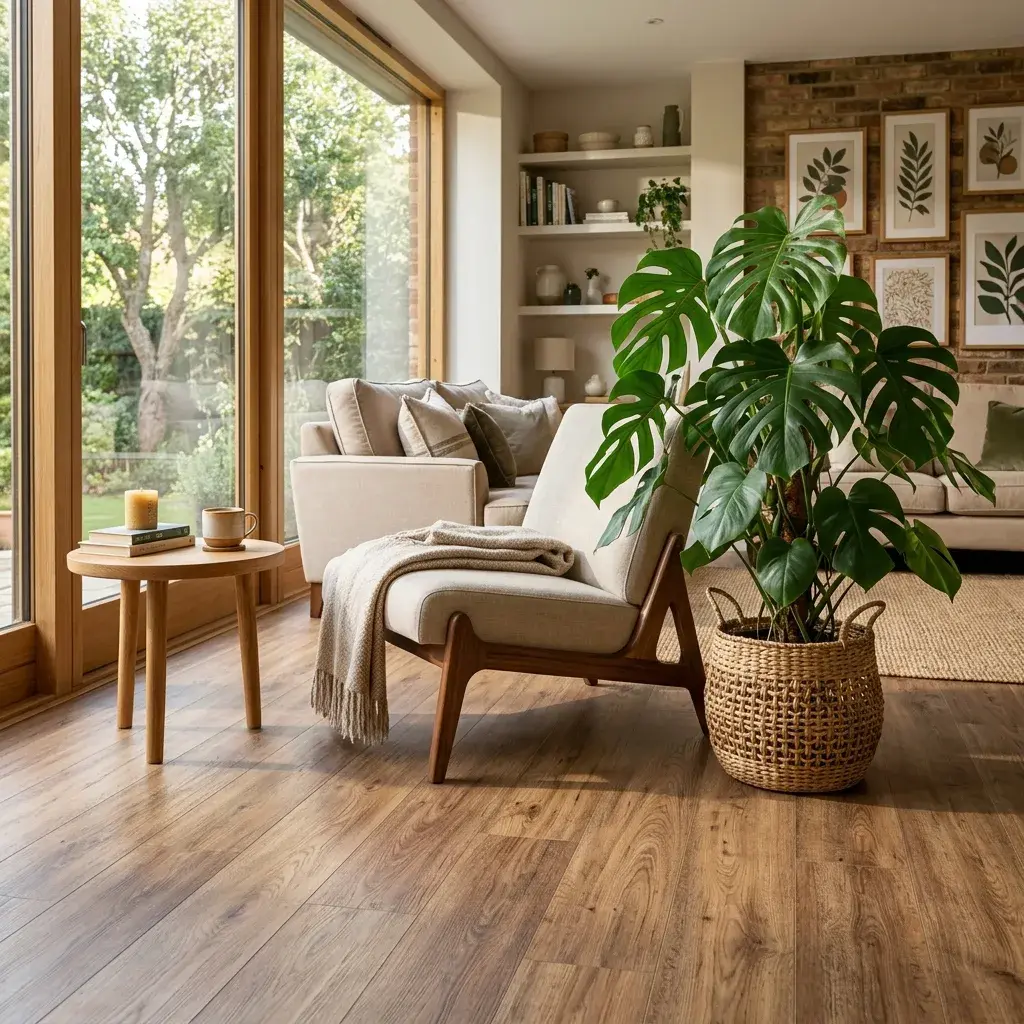
By choosing a high-quality hybrid floor that mimics Spotted Gum or European Oak, you preserve actual forests while still achieving the exact architectural aesthetic you desire.
Sustainability isn't just about the planet; it’s about the micro-environment inside your home.
VOCs (Volatile Organic Compounds) are toxic chemicals found in many building materials, paints, and glues. Over time, these chemicals "off-gas" into your home, causing headaches, respiratory issues, and allergic reactions.
The most sustainable product is the one you never have to throw away.
In the flooring industry, durability equates directly to sustainability. If you buy a cheap, poorly made laminate floor, it will likely warp or scratch within a few years, resulting in hundreds of kilograms of waste being sent to a landfill.
Hybrid flooring is engineered to last. With its 100% waterproof limestone core and commercial-grade wear layer, a premium hybrid floor can easily last 20 to 30 years under heavy household use. This massive reduction in "replacement cycles" drastically lowers your home’s overall carbon footprint.
Building an eco-friendly home in Australia does not mean you have to live on a concrete slab or sacrifice luxurious design.
By prioritizing materials that offer hyper-realistic timber aesthetics through sustainable manufacturing—like SPC Hybrid Flooring—you are making a choice that benefits the planet, improves your family's health, and adds incredible, long-lasting value to your property.
To explore our range of sustainable, low-VOC, and hyper-durable flooring options, visit Portland Flooring in Pakenham today. We are committed to helping you build a beautiful home that you can feel good about.